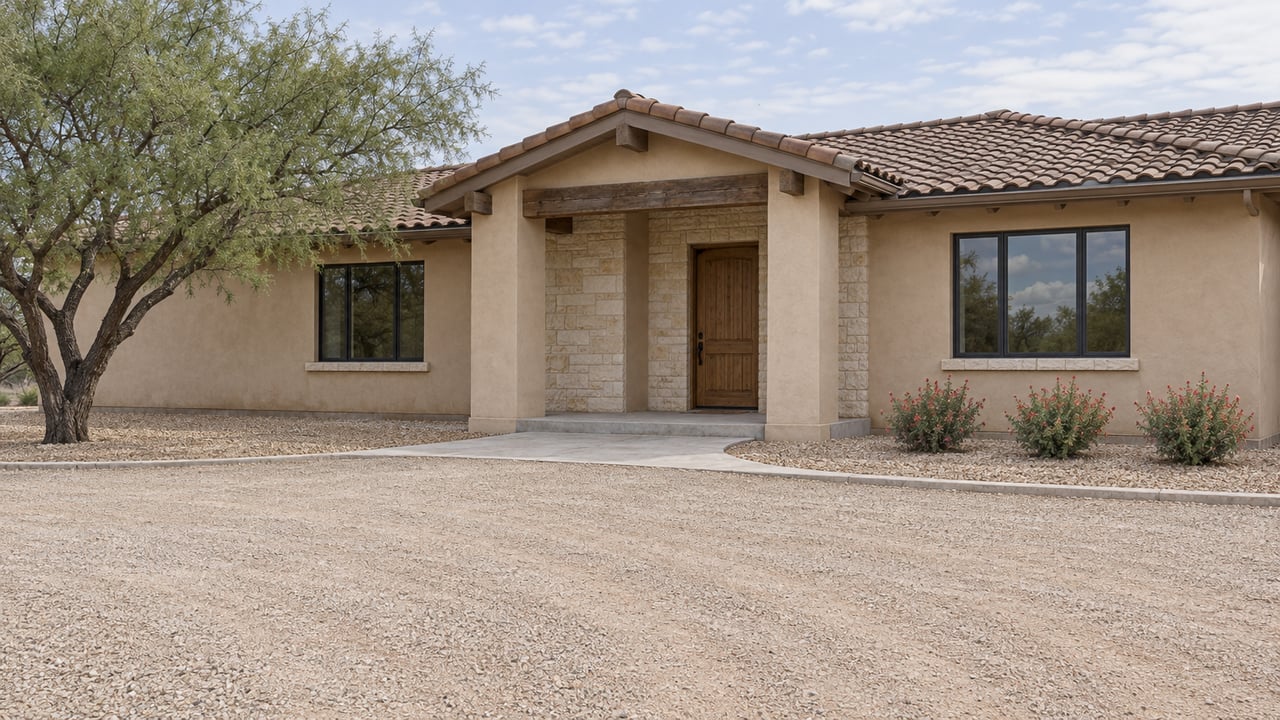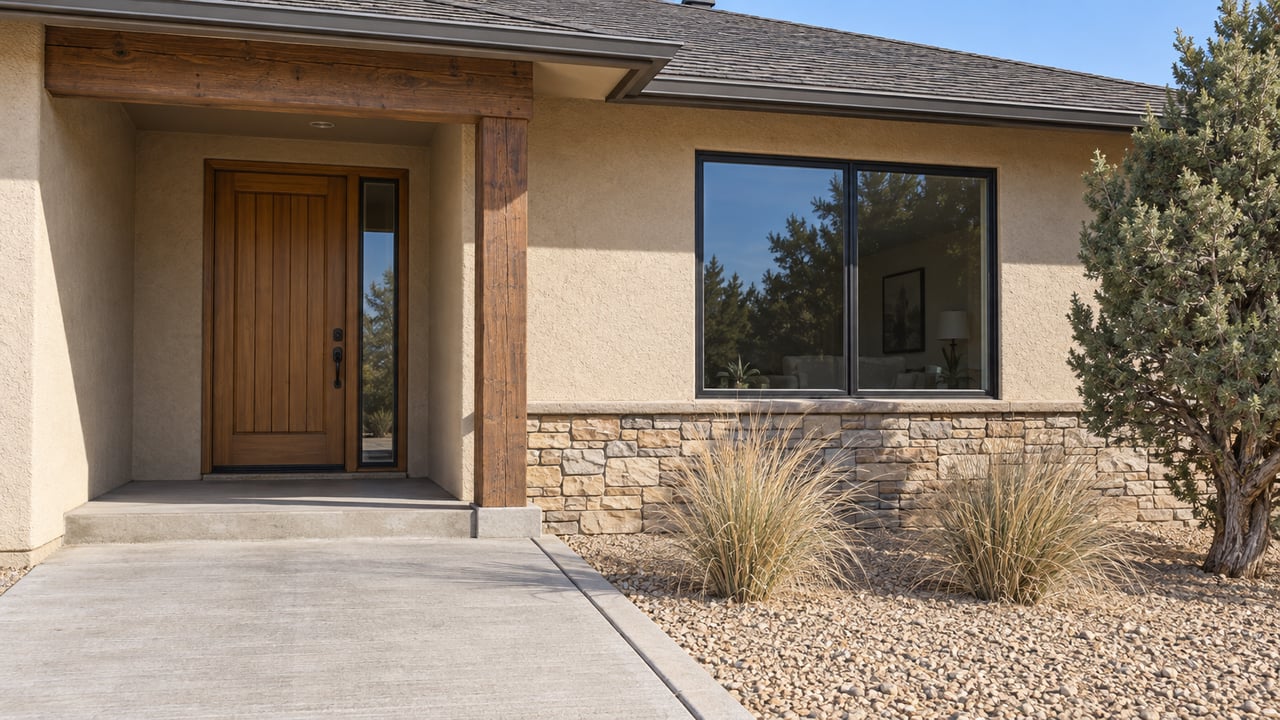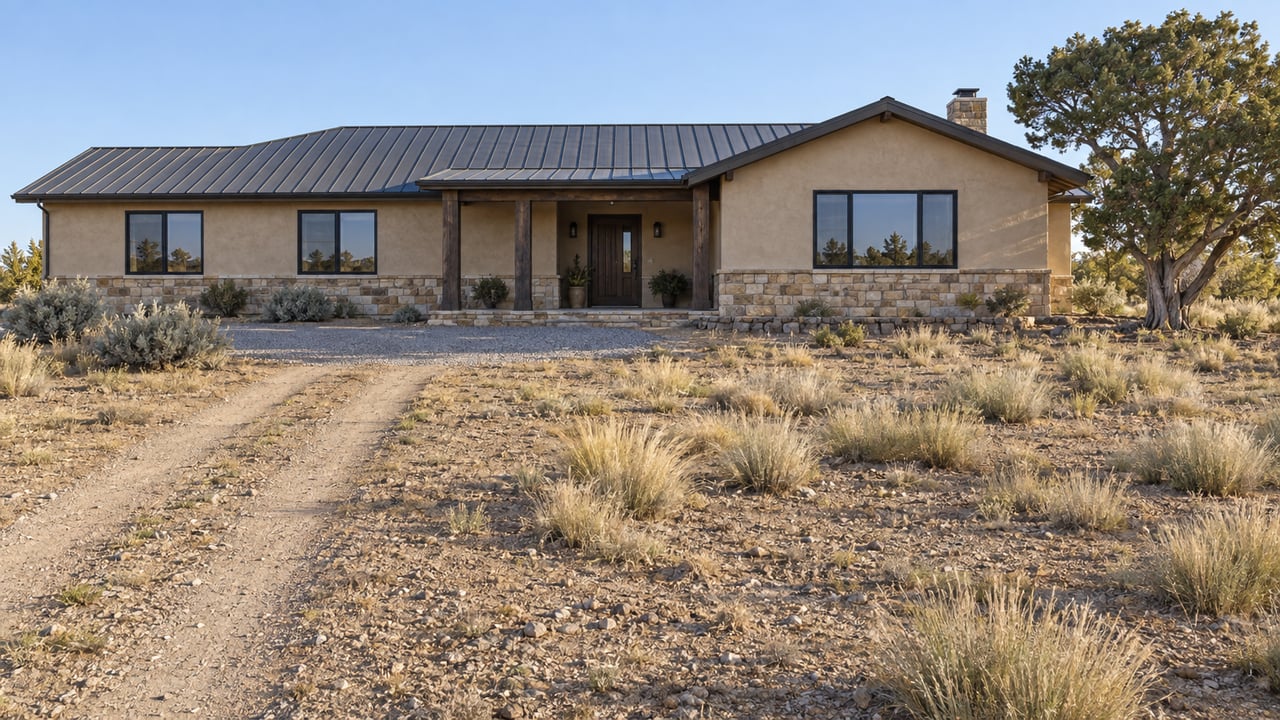
A horse property in Chino Valley can carry a tax bill that looks almost too good to be true, and it usually is, in the sense that the number belongs to the seller's paperwork, not to the acreage itself. Buyers touring listings in Bee Mountain Estates or Appaloosa Meadows may focus on the seller's tax bill of a few hundred dollars a year on five or ten acres with a barn and a round pen. Arizona's agricultural property tax classification is tied to an active for-profit operation and a filing the seller made with the Yavapai County Assessor,
This is the piece that gets missed in most horse-property conversations, which tend to focus on fencing, water, and arena footing. Those matter. But the tax mechanism underneath a Chino Valley acreage listing is its own moving part, with its own deadlines, its own documentation requirements.
Two Different Programs Wearing the Same Word
Yavapai County runs two separate processes that both use the word "agricultural," and conflating them is where most of the confusion starts.
The first is the Assessor's agricultural classification, which is a property tax valuation tool. If a parcel qualifies, the Assessor values it based on its agricultural income potential rather than its market value, which is why a working horse operation can post a tax bill that looks nothing like its neighbor's. The second is the Development Services agricultural exemption, which governs land use and permitting, not taxes, and it explicitly rules out the kind of horse property most buyers are picturing. The county's own exemption rule states that property used primarily for residential, recreational, or hobby purposes, including what it calls "horse acres" and hobby ranches, does not qualify.
So the tax break a buyer might be counting on runs through the Assessor's office, not through the exemption a seller's listing agent might reference. And qualifying for that tax break requires proving the horses are a business.
| Assessor's Ag Classification | Development Services Ag Exemption | |
|---|---|---|
| What it governs | Property tax valuation | Land use and permitting |
| Filed with | Yavapai County Assessor | Yavapai County Development Services |
| Hobby horse acreage eligible | No, must show a for-profit operation | No, explicitly excluded |
| Renewal | Requires renewal | Reviewed periodically, subject to cancellation |
What Actually Qualifies a Horse Operation
Arizona's rule for horses is unusually generous on one point and unusually strict on another. The Department of Revenue's Agricultural Property Manual sets no minimum acreage for an equine operation to qualify for classification, so a smaller parcel isn't automatically disqualified the way it might be for cropland or grazing. But the same manual is explicit that the operation cannot be a hobby. It has to be run with a reasonable expectation of profit, whether that's breeding, training, or boarding.
The Yavapai County Assessor's office backs that standard with real documentation requests, not a checkbox. Applicants may be asked to produce IRS Schedule F filings, a profit and loss statement, receipts for services rendered and items purchased, and copies of any leases tied to the operation. A field inspection to confirm actual land use and improvements is part of the process too. This is not a form you fill out because you own a horse. It's a form the county uses to distinguish a business from a backyard.
That distinction matters more in Chino Valley than in a lot of Arizona markets, because the town has a real equine economy behind it, not just marketing language. Yavapai College, based in Chino Valley, runs a Horse Husbandry program, and Chino Valley High School has an active FFA program built around animal science and agribusiness. Buyers aren't wrong to associate the area with working horse operations. They're wrong if they assume every listing that mentions horses has actually filed for the classification that comes with running one.
The Clock Nobody Mentions at Closing
Here is the part that catches people off guard after they've already closed. According to Yavapai County's Agricultural Land Use Application, Arizona statute requires that if agricultural classification is in place and the property changes ownership or use, the person who owns the property at the time of the change has to notify the Assessor within sixty days. Missing that window matters.
The classification also isn't a one-time filing. It has to be renewed, with applications due for the following tax year. A seller's classification might need renewal at closing, which means the paperwork trail a buyer inherits is only as good as what the seller actually filed and when.
None of this shows up on a listing sheet. A five-acre parcel in Wineglass Acres or Mollie Rae Estates can look identical to a comparable lot two roads over, down to the fencing and the outbuildings, and still carry a very different tax trajectory depending on whether the current owner has an active, properly renewed agricultural classification on file, or whether that classification lapsed two years ago and nobody updated the listing description.
Where This Actually Plays Out on the Ground
Chino Valley's acreage market isn't uniform, and that's part of why this mechanism hides so easily. Bright Star, the town's largest master-planned community, is built around site-built homes on standard lots backing BLM land with Mingus and Granite Mountain views, and agricultural classification isn't part of that conversation at all. Move a few miles out to Bee Mountain Estates, where the custom-build pipeline runs on larger acreage lots on the east side, or to smaller rural-residential pockets like Appaloosa Meadows and Wineglass Acres where buyers purchase one to five acres and select their own builder, and the ag classification question becomes relevant fast, because these are exactly the parcel sizes where a horse operation is plausible and the tax difference is meaningful.
Land inventory in Chino Valley this summer showed the same spread. As of July 2026, land listings ranged from roughly $42,000 up toward premium parcels near $4 million, with a median list price around $144,500 against an average closer to $395,000, a gap wide enough to signal that upper-end acreage is doing a lot of the pulling. That kind of range is normal for a market where lot size, water access, and zoning vary block to block. What it doesn't show is which of those parcels are carrying a filed, current agricultural classification and which ones simply have a horse in the yard.
What to Ask Before You Write the Offer
A buyer looking at horse or acreage property in Chino Valley has a short, specific list worth working through before an offer goes in.
- Ask the seller or listing agent directly whether the parcel currently holds an active agricultural classification through the Yavapai County Assessor, not just whether horses live on it.
- Ask when that classification was last renewed.
- Ask for whatever documentation supported the classification, since Schedule F filings, receipts, and lease abstracts are the same paperwork you'll eventually need if you want to keep it.
- Build the sixty-day notification requirement into your closing checklist, because that clock starts at transfer of title, not at your convenience.
- If you don't plan to run the property as a for-profit equine operation, price the full, unclassified tax bill into your budget rather than the seller's current one.
A Few Questions Worth Asking Directly
Can I apply for the classification after closing if I do plan to run a for-profit operation? You can, and the application goes to the Yavapai County Assessor on the standard Agricultural Land Use Application. Just plan around the application deadline for the classification to apply to the following tax year.
Does the Development Services agricultural exemption help with my property taxes? No. That exemption is a land use and permitting tool, separate from the Assessor's classification, and it specifically does not cover hobby horse acreage.
If you're comparing horse or acreage listings anywhere in Chino Valley, Jess Savoini can help you pull the actual classification history on a parcel before you write an offer, not after your first tax bill arrives. Let's Connect.
This article is general information, not legal, tax or financial advice. Consult a qualified professional about your situation.